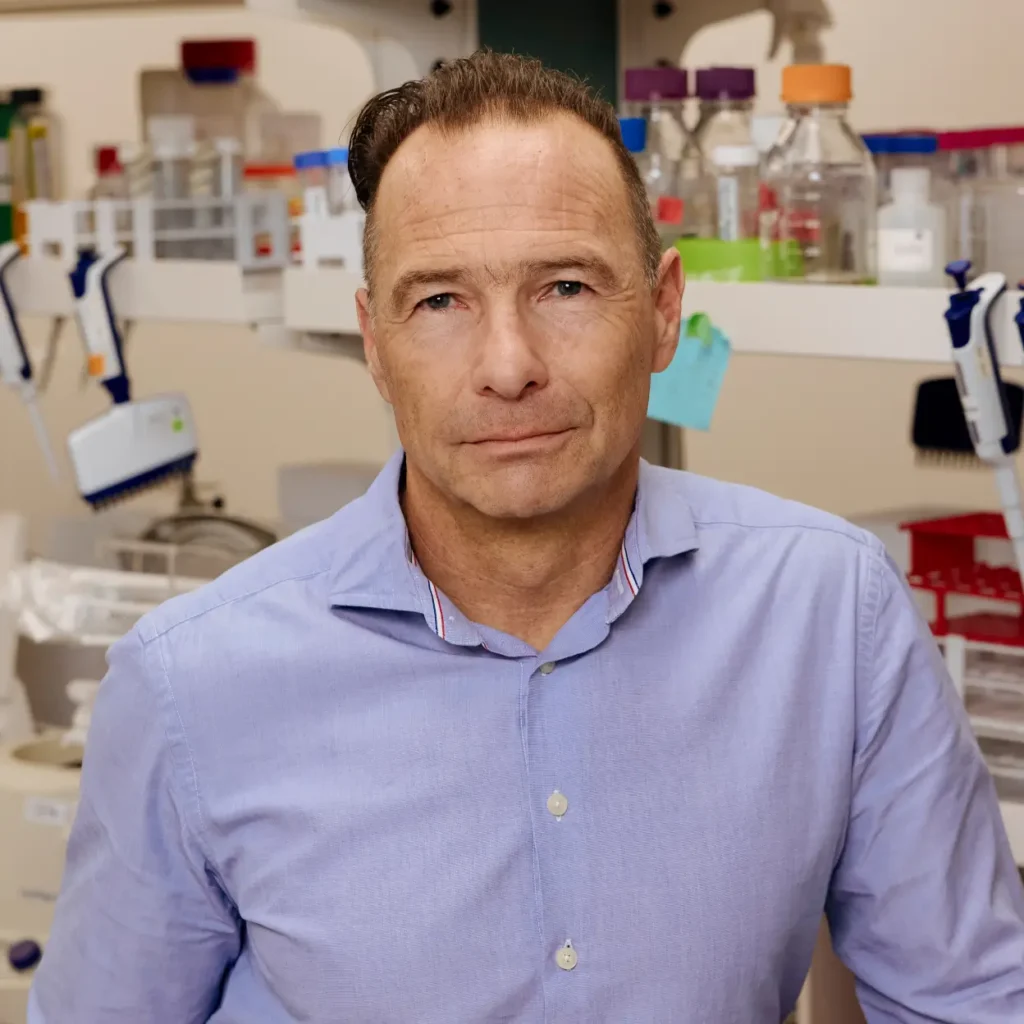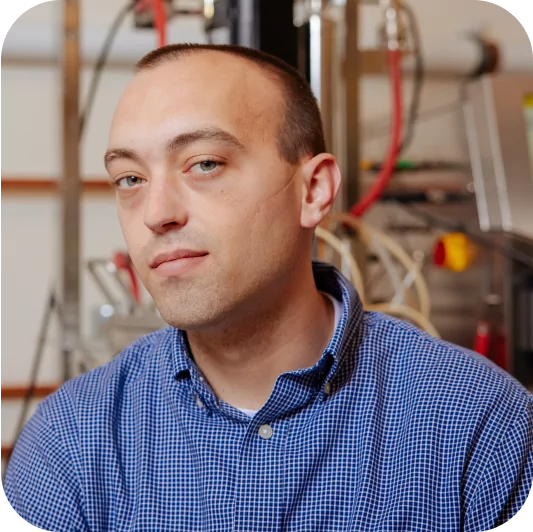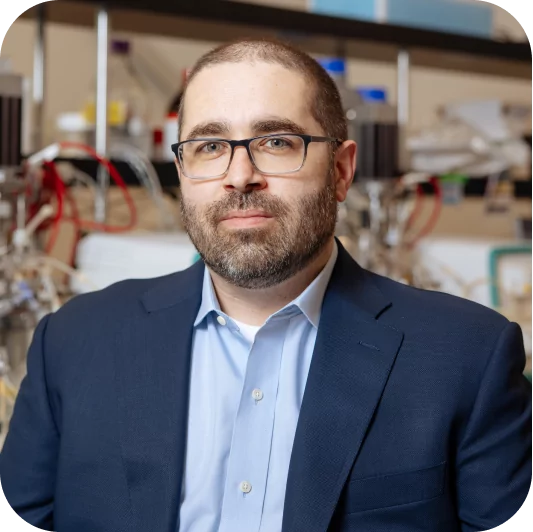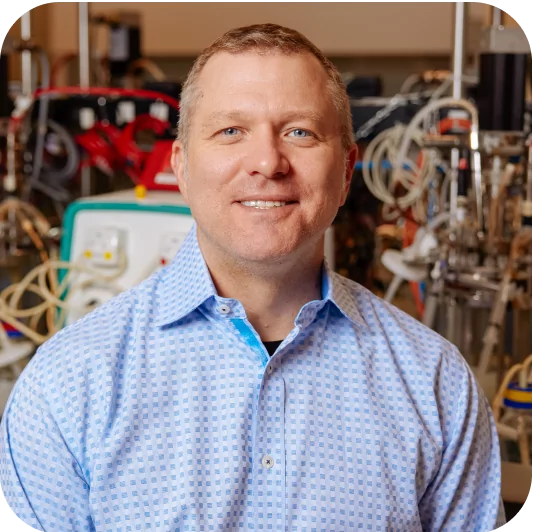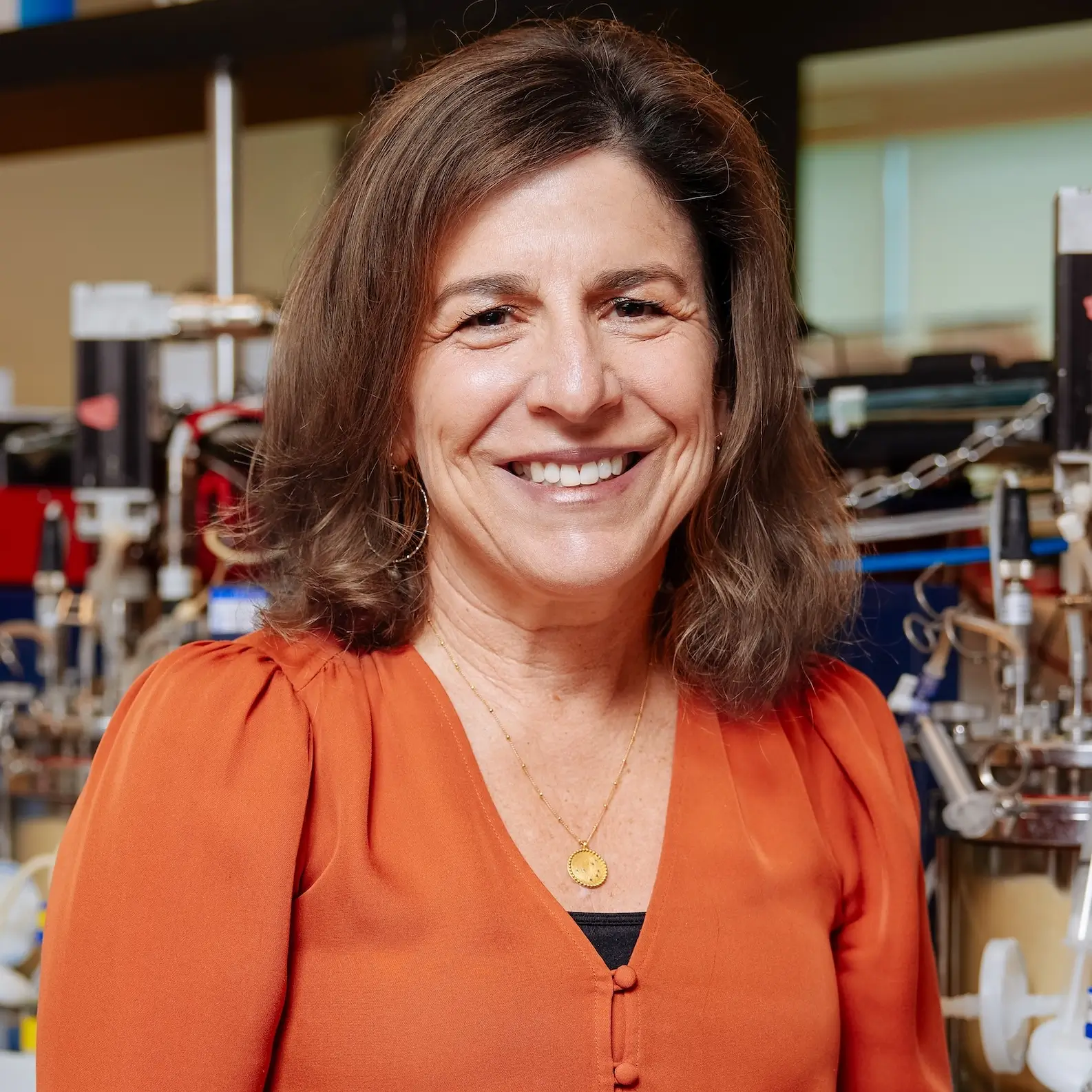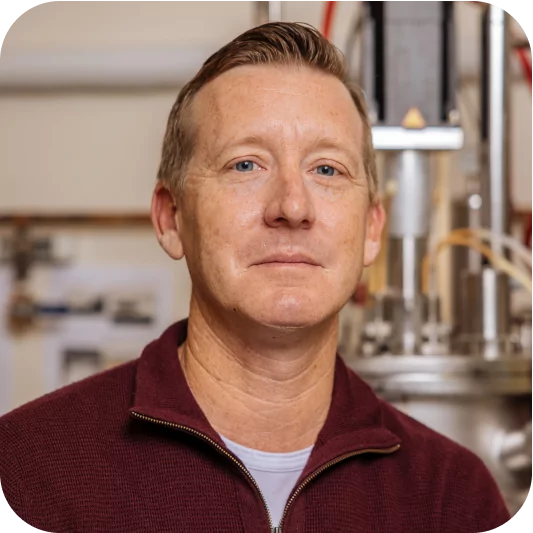
Today, Antheia is pleased to announce the appointment of biotech business development veteran Chris Savile as VP of Business Development and Partnerships. Ahead of today’s announcement, we sat down with Chris to learn more about his career journey, what inspired him to join Antheia’s mission, and what he’ll focus on in this new role.
Tell us about your background and career journey. How did you end up working in biotech?
I’ve spent the last 20 years in industrial and commercial roles in the Bay Area. I’m an organic chemist by training — I started out wanting to be a synthetic chemist, but then I discovered enzymes and that biology could make a lot of things far more efficiently than chemical synthesis could. That led me to get my PhD in biocatalysis, engineering enzymes to perform different types of chemistry to make valuable molecules for pharma and other fine chemical industries.
I started my career at Codexis in a technical role, developing enzymes for pharmaceutical manufacturing. I later transitioned into a commercial role — business development and commercial operations — and I’ve been in that space ever since, across different companies and different roles. I moved on to Intrexon before spending about seven years at Willow Biosciences in various capacities, including as CEO most recently.
Through all of those roles, the core job has always been the same: bridging the gap between science and business, and finding alignment between what the technology can do and what real commercial opportunities exist. R&D often wants to pursue things that are scientifically fascinating but don’t have a clear business case, and business folks sometimes want to go after things that are unrealistic from a technical standpoint. My career over the past 15 years has been about cutting through the noise and focusing on projects that make sense from both sides of a biotech business.
You’ve known Christina and the Antheia team for about 10 years. What made you say “yes” to joining at this point in the company’s journey?
Antheia is the real deal when it comes to biosynthesis companies. They’ve succeeded where so many others have tried and fallen short. When I first crossed paths with Christina at Intrexon, we were actually working on similar projects — technically competitors, though both of us just wanted to see the science work. We kept in touch over the years, and even did some work together on plant alkaloids and thebaine.
What really caught my attention last year was the success Antheia had achieved at commercial scale. Taking a complex biosynthetic pathway, getting carbon to flow efficiently through it, and producing a meaningful amount of product — that’s one thing, and a lot of companies have gotten there. But actually scaling it to produce metric tons of something as complex as thebaine? Nobody else has done that. That is exactly what I had been trying to accomplish at other companies, and Antheia has cracked the code.
That changes everything in terms of the commercial conversations I get to have. Problems I looked at five or six years ago and had to set aside — because I wasn’t sure the technology could get there — I can now look at them and say, this team can do this. That’s a pretty exciting place to be.
What are your primary responsibilities as VP of Business Development and Partnerships, and what does a typical day look like?
The core of the role is continuing to build on what Antheia has already done. We’ve successfully developed, scaled, and commercialized our first product. The goal now is to apply all of that hard-won experience to identify and pursue similar opportunities in biomanufacturing with new targets that we can scale and bring to commercial markets.
A big part of my job is determining which of those opportunities we pursue ourselves and which ones we’d like to develop with a partner. In some cases, it makes sense for Antheia to own the full process — invest, scale, produce, and sell. In others, it may make more sense to partner with someone who already owns that market or has complementary manufacturing capabilities. I’m working through those decisions across our current pipeline — identifying what’s practical in the near term, and also looking further out at higher-risk, higher-reward opportunities to start qualifying now.
On a day-to-day basis, I spend a lot of time talking to the market directly. I’m not an over-analyzer — I’ll jot down a back-of-the-envelope idea, and then I pick up the phone. Oftentimes you have what seems like a great idea, and the market tells you something completely different. We’re a global company, so I’m talking with potential partners in Europe, Asia, and India to present our capabilities and start the dialogue. Every day brings surprises — you think you know what a meeting is going to be about, and you come out with an entirely new direction to explore. It’s very external facing, but equally important is bringing those market insights back to the internal team to further investigate and decide if we want to pursue.
What does an ideal partner for Antheia look like, and where do you see the most opportunity?
First and foremost: Can they sell it? Making something is one challenge but getting it on the market is another entirely. If we’re producing a new active pharmaceutical ingredient, we want to work with a partner who knows how to manufacture at spec, knows how to release product through the appropriate regulatory channels, and has the existing customer relationships to get that new ingredient qualified and adopted. That commercial infrastructure is critical.
Second, because everything we do requires fermentation, the ideal partner either has that capability themselves or has access to a manufacturing network that can do it cost-effectively. Bringing in additional contract manufacturing parties can add cost quickly, and if the scale-up economics don’t work, the opportunity doesn’t make sense.
Third, and this one is important: we need a partner that genuinely believes in the technology. Engineering biology always requires more upfront investment than conventional chemistry. Chemistry can be faster in the short term, but the benefits are incremental. What we do is transformative, but it takes longer and you need an advocate on the other side who understands the long-term outlook and will stick with it.
The good news is that we can partner at different stages depending on the situation. If an opportunity isn’t on our radar but someone else believes in it and wants to bring us in, we can partner early and co-fund the development. If it’s something we’ve already de-risked internally and want to capture more of the value, we might partner later or even take it to market ourselves. There’s a lot of flexibility in how we structure these arrangements.
In terms of where the opportunities are, I’m looking at things similar to what Antheia has already accomplished with thebaine — large existing markets where the current chemistry is challenging or where supply chains are fragile and unreliable. People may not realize how many active pharmaceutical ingredients rely on variable plant harvests or animal agriculture. There are a lot of those situations across pharma, and our technology is well suited to address them.
More broadly, our approach is agnostic to therapeutic indication. We’re evaluating molecules based on the difficulty of making them and the value of replacing a problematic process. That opens up opportunities across oncology, anticoagulants, immunosuppressants, anti-inflammatories, and more.
What does success look like for you over the next 12–24 months?
I’d like to see a handful of new partnerships take shape. One priority is exploring potential partners for some of our existing assets where the technical work has already been done and the pathways have been de-risked, but where the best path to value could be through a partnership rather than commercializing ourselves. When you go to a partner with something that already has proof of concept behind it, you’re in a much stronger position to realize tangible value from that work.
Beyond those near-term assets, I’d also like to qualify new opportunities for our forward-looking pipeline. And as we think further out, I’d love to see some early groundwork laid on the discovery side, using the platform in more exploratory ways to generate new opportunities for future, breakthrough products.
What hot topics or trends are you following, and is there anything you think is underappreciated or overhyped?
The trend I’m most excited about is using biology for discovery. We’ve largely neglected natural products as a source of new pharmaceutical ingredients for many years. There’s a real opportunity to use platforms like ours to generate new chemical entities that can be evaluated as drug candidates. The challenge is that it’s still a bit too slow for the pace of industry, so we need to get more efficient and more thoughtful about how we approach it. Drug development is hard, engineering biology is hard, and doing both at once is even harder, but I think it’s an underinvested area with a lot of potential.
AI is probably the most discussed topic in our space right now, and I’d say it’s simultaneously overhyped for some applications and under-appreciated for others. The challenge in biology specifically is that AI is only as good as the data sets it learns from, and biological data sets are notoriously messy. It’s starting to show real value in protein engineering, and I expect it will increasingly contribute to pathway engineering as those data sets improve. We’ve actually been applying machine learning approaches to understand how mutations affect protein function for over 25 years — it’s not new, it just goes by a trendier name now. What I am genuinely excited about is Antheia’s proprietary knowledge base for engineering yeast. That data represents years of real experimental work, and as the tools for working with it improve, it becomes increasingly valuable. The models need to be built to learn from that data effectively, and there’s a significant opportunity there.
Based on your experience so far, what makes Antheia a great place to work?
There’s a deep-seeded sense of trust that permeates through the entire company. Christina is an exceptional founder and CEO — she’s the face of the company and an extraordinary scientific visionary — but she also extends an enormous amount of trust to the people around her. She gives you the latitude to do what you need to do, with the expectation that you’ll be transparent about it and bring those insights back to the team so decisions can be made collectively. I couldn’t ask for a better working environment.
Beyond that, I feel like I’ve stripped away all the noise from previous roles and now get to focus almost entirely on what I actually love doing: identifying real opportunities, qualifying them, and figuring out how to get the technology to create value. And I’m doing that in an environment where people work hard, there’s a genuine culture of learning, and the team is receptive to input and experience from the outside. I’ve offered perspectives drawn from what worked and didn’t work at previous companies, and the reception has been really positive. That matters.
Tell us about your life outside of work.
I’m a typical Bay Area dad with a 10-year-old and a 12-year-old, which means life outside of work is pretty much all about the kids. That’s where my energy goes, and I’m happy to give it. I actually had about two and a half months off at the end of last year, which I had planned to extend, but I got so excited about this opportunity that I came back sooner than expected.
Follow Antheia on LinkedIn.