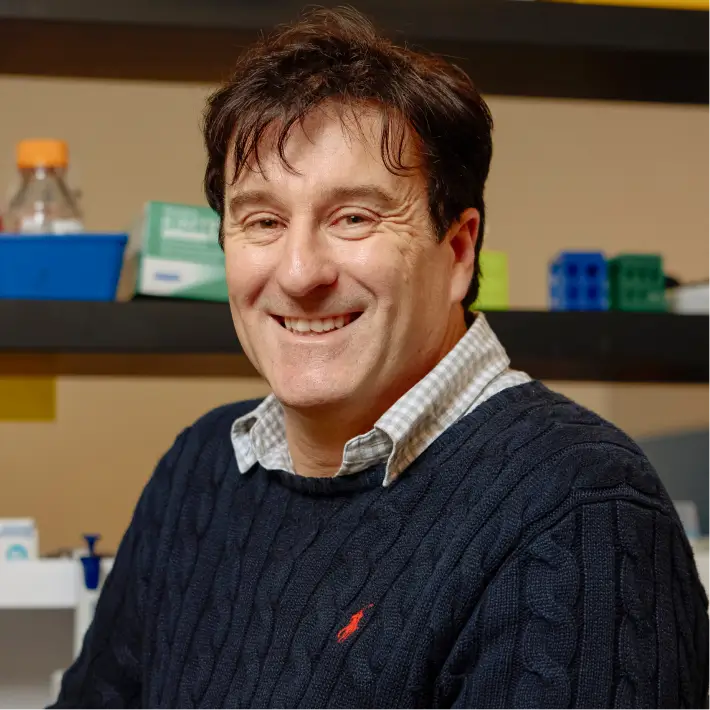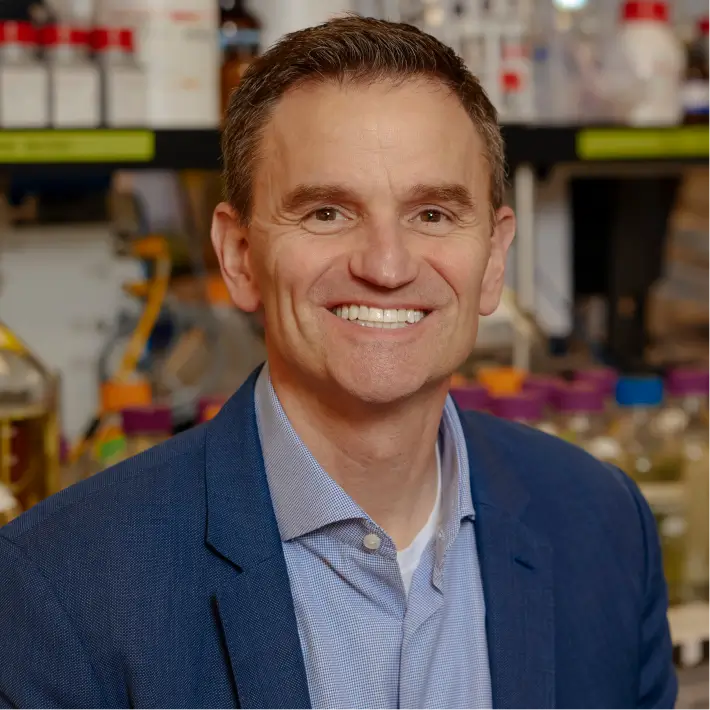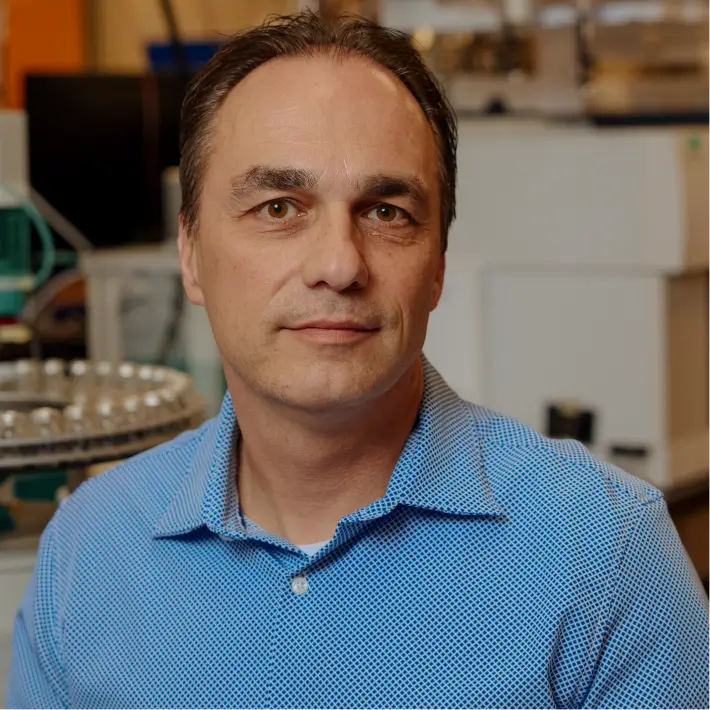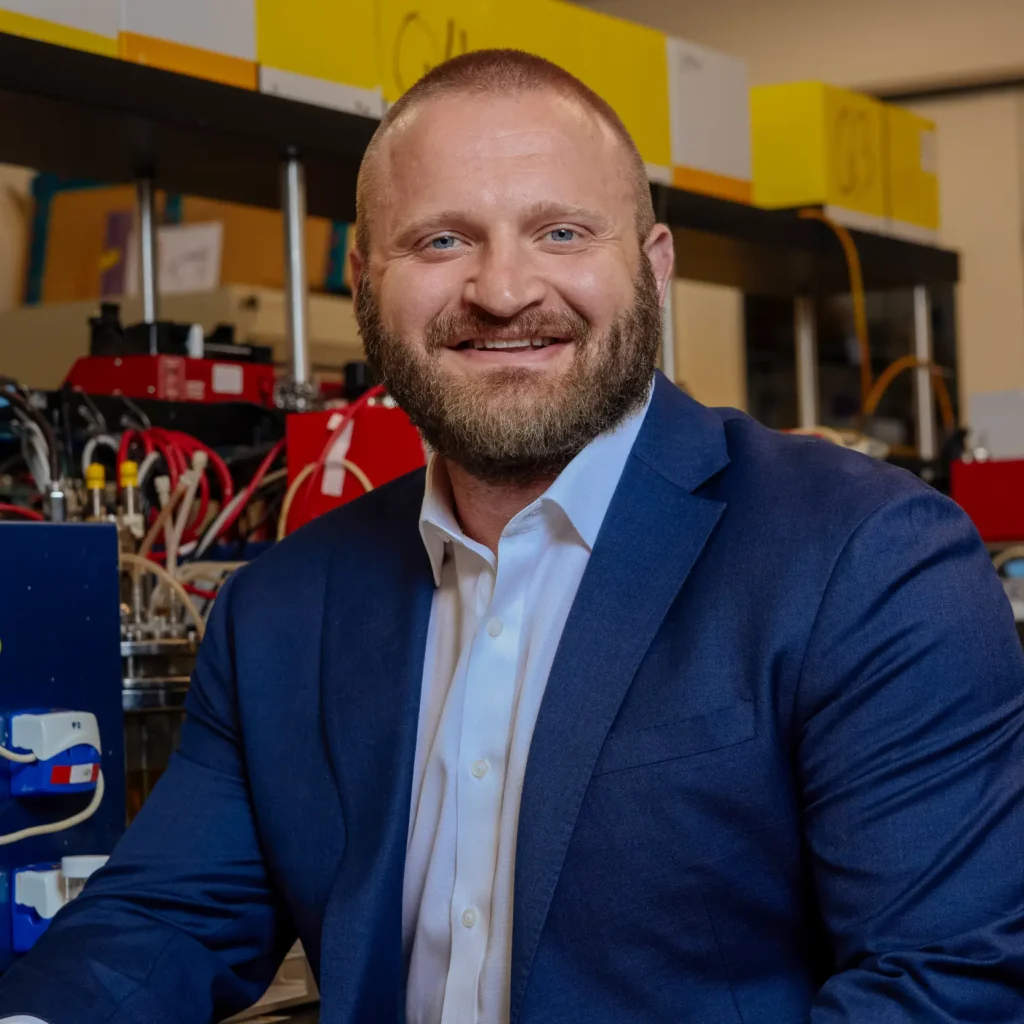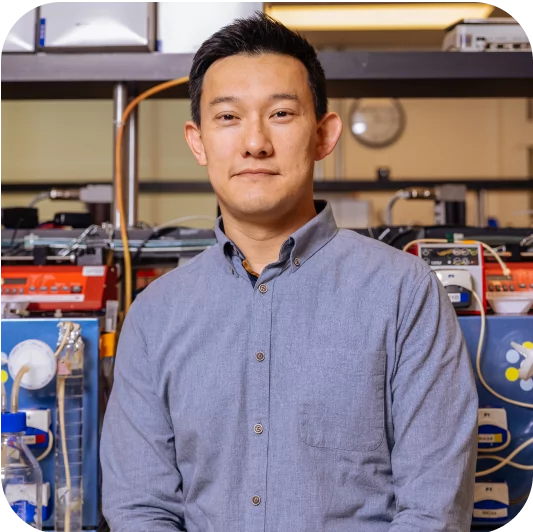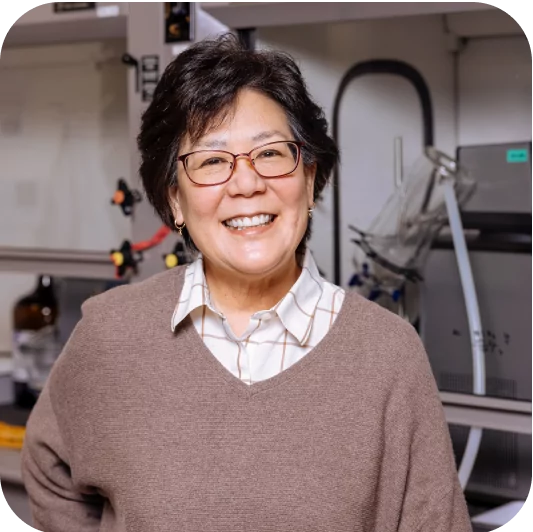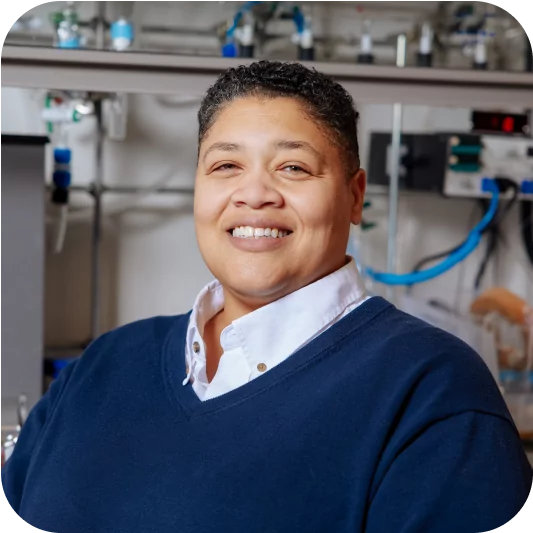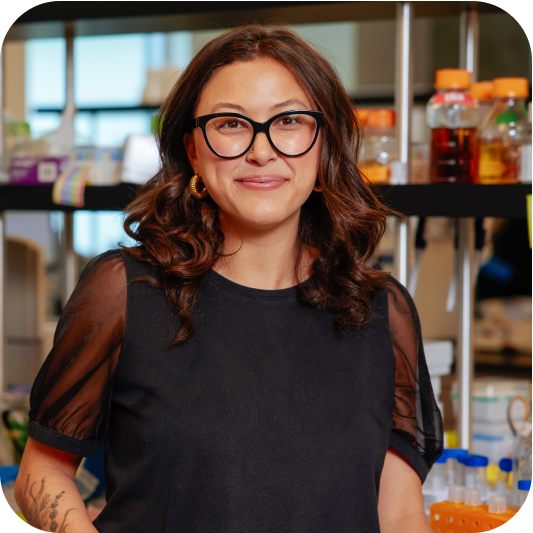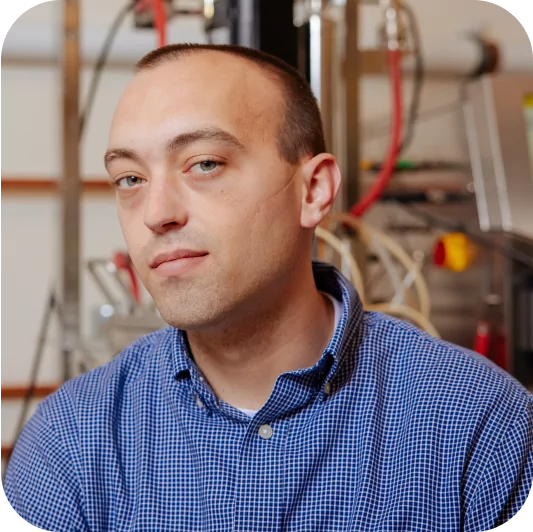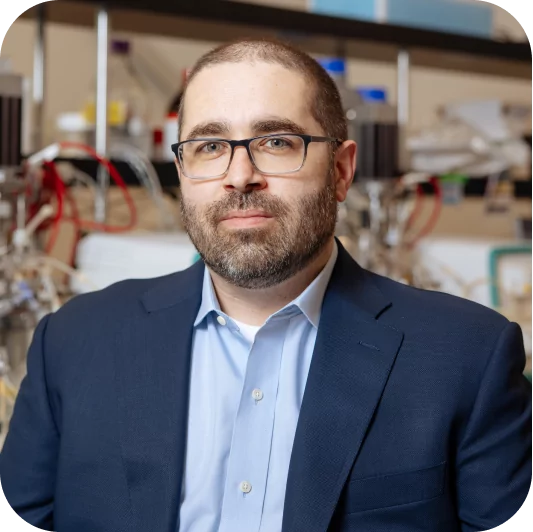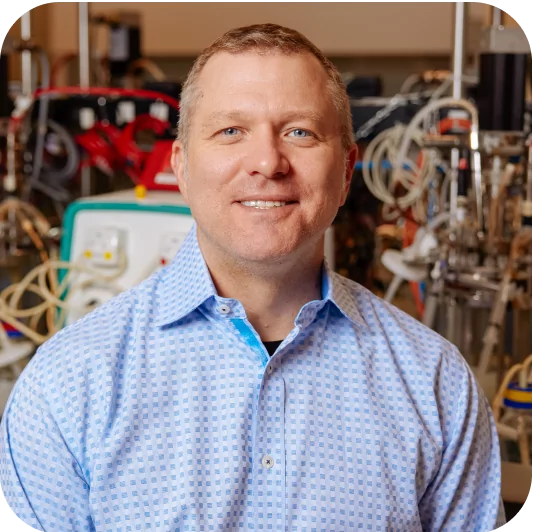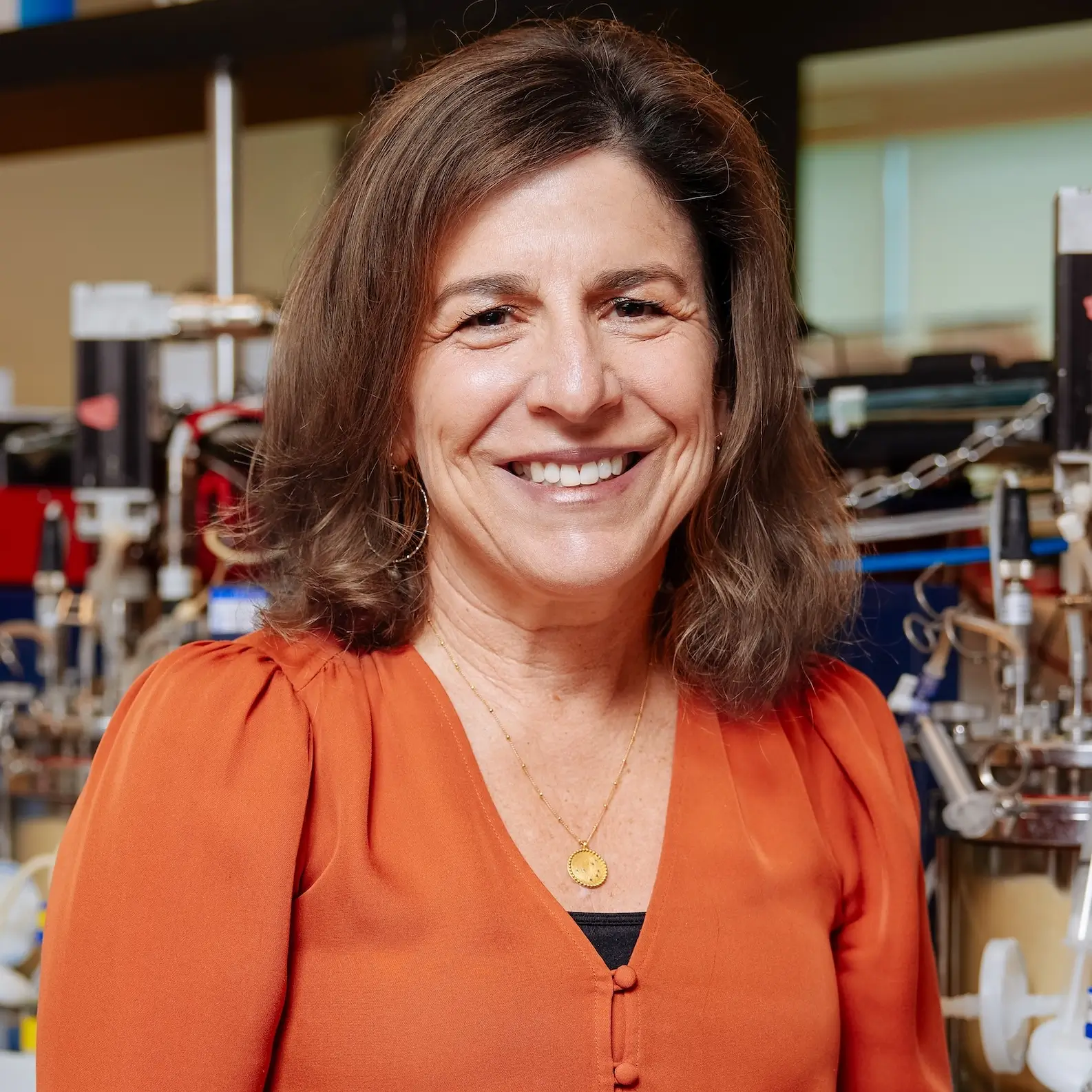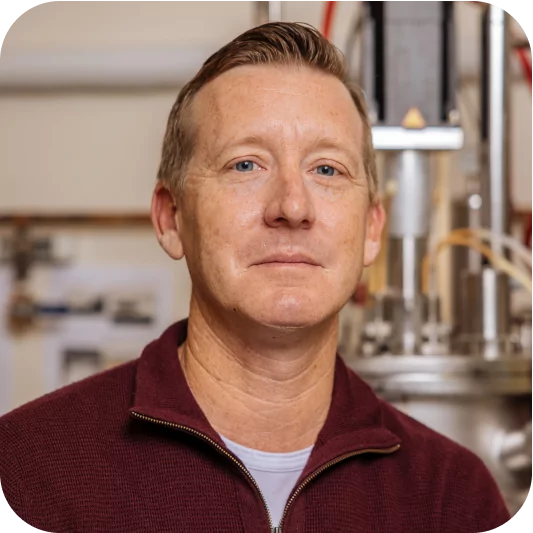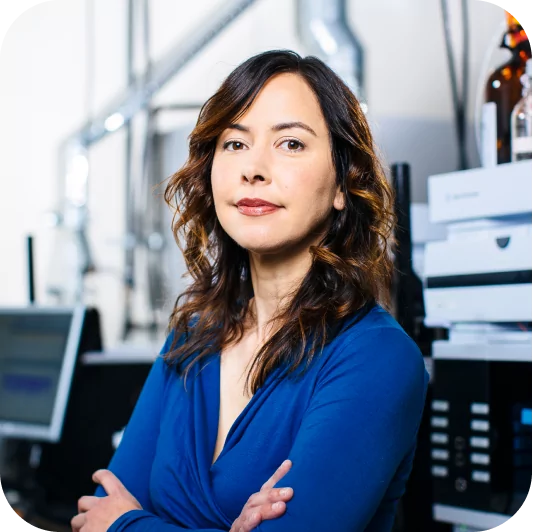
As global pharma leaders convene in New York City for DCAT Week 2026, Antheia is proud to highlight its strategic partnership with TAPI – Technology and API Services. Announced in November 2025, this collaboration unites Antheia’s advanced biosynthesis platform with TAPI’s world-class fermentation infrastructure and API manufacturing capabilities to advance the commercialization of critical pharmaceutical ingredients at global scale.
We sat down with Zack McGahey, COO of Antheia, and R. Ananth, CEO of TAPI, to discuss how this partnership came together, what makes it work, and what it means for the future of pharmaceutical manufacturing.
R. Ananth, tell us a bit about your background and what led you to your role as CEO of TAPI. What has your journey in the pharmaceutical industry looked like?
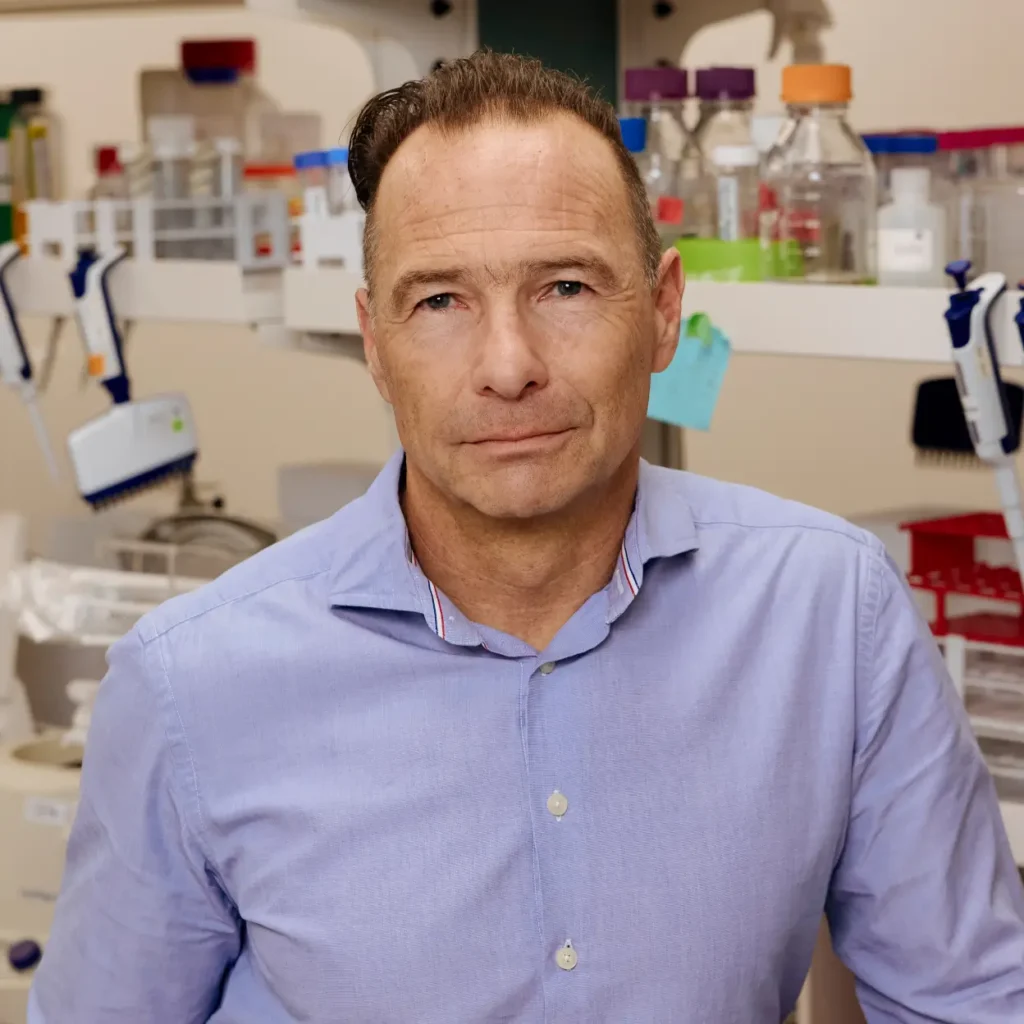
R. Ananth, PhD, CEO, TAPI: I have spent close to four decades in the pharmaceutical and life sciences industries, leading global organizations across APIs, biologics, generics, and specialty businesses, with operations spanning multiple geographies. Throughout my career including leadership roles at Teva API & Biologics, Cipla, Dr. Reddy’s Laboratories, and Piramal Healthcare — I have been drawn to environments where science, operational excellence, and strategic execution intersect. What has consistently motivated me is the opportunity to scale complex manufacturing systems, strengthen global supply chains, and build organizations that combine technical depth with commercial agility.
Leading TAPI felt like a natural progression. With its nearly century-long legacy in API manufacturing, global footprint, and strong R&D foundation, TAPI sits at the core of pharmaceutical innovation. The opportunity to guide such a respected platform into its next phase of growth — expanding its CDMO capabilities, advancing bioprocessing technologies, and reinforcing its role in securing essential medicine supply — is both professionally meaningful and strategically compelling.
TAPI has a remarkable footprint with 13 sites, 4,100 employees, and 350+ products across 100+ countries. How do you think about the role TAPI plays in the global pharmaceutical supply chain?
R. Ananth: We view our role as both foundational and enabling. Our scale gives our partners options. With 13 sites, multiple technology platforms, and expertise across fermentation, high-potent APIs, peptides, oligonucleotides, steroids, and complex small molecules, we can support a wide range of modalities and technical solutions under one integrated quality system. This “One TAPI” approach means partners like Antheia benefit from the strength of a global network while working within a cohesive operational and regulatory framework.
At the same time, we are very conscious that size alone is not a differentiator. Large infrastructure must be matched with responsiveness and accountability. We strive to combine the breadth and resilience of a global organization with the accessibility and agility of a focused partner — giving our customers confidence that they have options, expertise, and capacity behind them, while still experiencing a collaborative and personal working relationship.
TAPI describes its mission as “Advancing Health from the Core.” What does that mean in practice, and how does it shape the partners you choose to work with?
R. Ananth: “Advancing Health from the Core” reflects both what we do and how we think. As an API manufacturer and CDMO, we operate at the foundation of every medicine — the ingredient itself. In practice, that means we take responsibility not only for quality and compliance, but for reliability, scalability, and long-term supply security. It also shapes the partners we choose. We look to collaborate with companies that are pushing scientific boundaries while sharing our commitment to rigor, sustainability, and patient impact. For us, advancing health starts at the molecule level, but it extends all the way to global access and trusted partnerships.
Zack, can you tell us how Antheia came to partner with TAPI, and what made this collaboration a compelling fit?
Zack McGahey, COO, Antheia: I first became aware of TAPI’s growth and expansion into contract manufacturing about a year ago. Our first meeting was at DCAT Week 2025, where we began to seriously explore whether there was potential for a partnership. Both parties were highly engaged and the complementary nature of what we each brought to the table was immediately evident.
From there, things moved quickly. We visited TAPI’s manufacturing sites in Europe in June and from that first on-site meeting, the alignment between the two companies was unmistakable. We were so impressed that we brought a full technical team back within a matter of weeks for additional diligence. By October, we had a definitive contract in place — just four months from our first site visit to signed agreements. That’s an unusually fast timeline for a deal of this complexity, and it really speaks to how well-matched and motivated both organizations are.
Can you speak to what specifically made TAPI the right technical fit for Antheia?
Zack: Our core technology produces essential medicines, key starting materials, and APIs through fermentation. TAPI has significant capacity and capability in fermentation, alongside high-volume API conversion capability. That means they can handle both the fermentation and the chemistry — it is genuinely rare to find a partner that does both well. You can find plenty of facilities around the world that do chemical synthesis of APIs and plenty that do fermentation, but finding a partner with deep expertise in both is uncommon.
Beyond the technical fit, they had a mutually aligned business model that allowed for the capacity we needed. Critically, they’re also very comfortable with the regulatory requirements of our products. TAPI’s global manufacturing footprint, technical capabilities, and regulatory readiness gave us a lot of confidence that this would be a great fit.
Transitioning from lab-scale breakthroughs to commercial-scale production is one of the biggest hurdles in biotech. From each of your perspectives, what are the most significant barriers companies tend to face?
R. Ananth: One of the biggest barriers is underestimating the complexity of scale. A process that works beautifully on a lab scale does not automatically translate into predictable, efficient, and compliant commercial manufacturing. Companies often encounter challenges in process robustness, yield consistency, impurity control, raw material security, and regulatory readiness.
Another critical hurdle is infrastructure — building or accessing facilities that are not only technically capable but supported by mature quality systems and global regulatory experience. Commercialization is not just about scaling volume; it is about engineering quality into the process from the start. That requires early alignment between development science and manufacturing reality, strong tech transfer, and a partner who understands both innovation and industrial execution.
Zack: As R. Ananth touched on, there are real technical challenges. Scaling a process from hundreds of liters to 100,000 liters is not trivial, and things will come up. But I’ll say that Antheia has already demonstrated we can work through those challenges. We’re commercial in Europe, our processes have performed robustly in commercial campaigns, and our products have been approved by regulatory agencies. So while I don’t want to discount the difficulty, we’ve proven we have the right team and experience to anticipate issues and de-risk them proactively.
It has been tremendously valuable to have TAPI as a partner as we tech transfer our next product. They have brought countless products to market using various manufacturing approaches, and that depth of experience helps us anticipate challenges. They’ve given us complete confidence that we’re going to be successful.
How does TAPI’s flexible tech transfer model and Center of Excellence for Biocatalysis and Enzyme Development help bridge the gap between innovation and commercial scale?
R. Ananth: Bridging that gap requires both flexibility and depth of expertise. Our tech transfer model is designed to be collaborative and adaptive — we integrate closely with our partners’ scientific teams to ensure knowledge flows seamlessly from development into manufacturing. Rather than applying a rigid framework, we tailor the scale-up strategy to the specific biology, chemistry, and commercial objectives of each program.
At the same time, our Center of Excellence for Biocatalysis and Enzyme Development provides the technical backbone needed for complex biosynthetic processes. With in-house enzyme engineering, advanced fermentation capabilities, and industrial-scale infrastructure already in place, we can optimize performance while ensuring robustness and regulatory compliance. For a partner like Antheia, that combination enables innovation to move from breakthrough science to reliable commercial supply with confidence.
It’s been several months since the partnership was formalized. How is it progressing, and what has made it work well so far?
Zack: I can’t speak highly enough of the TAPI team. They’ve been truly exceptional — finding solutions to accelerate timelines and showing real creativity and diligence in reducing complexities. Both companies are mutually aligned on getting our next product launched and that shared motivation has made for a remarkably productive collaboration.
Since signing the agreement, we dove headfirst into tech transfer work — getting our processes fully designed, working through equipment procurement, and managing facility modifications. Throughout it all, the TAPI team has been thorough, communicative, and proactive. Honestly, the pace has been so strong that our teams have already started turning their attention to what expansion looks like for future products and sites.
R. Ananth: I would echo Zack’s sentiment on collaboration. The partnership is progressing in a very constructive and collaborative way. From the outset, there has been strong alignment in mindset — both teams are science-driven, pragmatic, and focused on building something scalable and durable. What has made the collaboration successful is the openness and depth of engagement between our technical teams. Our scientists, engineers, and quality experts are working closely with their Antheia counterparts, navigating process refinements in real time. As with any complex biosynthetic scale-up, there have been adjustments along the way, but our ability to address changes proactively while maintaining momentum has been a real strength.
Looking ahead, I see this partnership evolving well beyond a single program. The real opportunity lies in creating a repeatable model for industrializing biosynthetic innovation — combining platform science with proven global manufacturing infrastructure to extend across multiple products and many years.
Antheia has spoken about the importance of building a feedback loop between R&D and manufacturing as the company scales. Can you speak to how that’s evolved?
Zack: This is something I’m really proud of. Early on, when you’re focused on R&D and optimization, it’s easy to develop processes in a degree of isolation — you’re asking how much product you can get from the organism, but you’re not necessarily thinking through the downstream manufacturing implications at scale.
A great example of this came up directly in the context of the TAPI partnership. During a recent visit to TAPI, we learned about the complexity involved in our raw materials. It crystallized just how consequential our formulation choices are at commercial scale. In a remarkably short period of time, our teams worked together to simplify raw material inputs without negatively impacting productivity. Operational simplification was the original goal, but it turned out to deliver a substantial cost reduction on ongoing raw material quality control at TAPI as well — an outstanding benefit.
While it seems incremental on paper, the cost implications at commercial scale are tremendous. What I find most impressive isn’t just the result, it’s the partnership between our teams — we support each other, exchanging ideas in both directions and finding solutions together. And this is what positions Antheia uniquely: we can take processes end-to-end from early-stage development through commercialization and do so efficiently.
Looking at the broader industry, what excites you most about the next five years of API manufacturing? What role do you see the Antheia-TAPI partnership playing in that future?
R. Ananth: What excites me most is the convergence of advanced science and industrial execution. We are seeing rapid progress in biosynthesis, biocatalysis, digital process control, and continuous manufacturing — technologies that are not only improving efficiency but fundamentally reshaping how we think about supply security and sustainability. The future belongs to organizations that can integrate innovation with scalable, compliant infrastructure and bring complex molecules to market with speed and reliability.
The Antheia-TAPI partnership reflects exactly that direction. By combining Antheia’s biosynthetic platform with TAPI’s commercial-scale fermentation capabilities and global quality systems, we are demonstrating how next-generation science can be industrialized responsibly and efficiently. Collaborations like this will define the next era of pharmaceutical manufacturing — where innovation is not confined to the lab, but is translated into resilient, accessible global supply.
Zack: There have been up to 50 new drug shortages per year for the past decade. As someone who has spent his entire career in manufacturing, I’m incredibly excited to have an opportunity to make a dent in that equation and have a lasting impact on the security of our drug supply. Even in my own household, my kids have experienced the effects of medicine shortages, and that makes this work feel deeply personal.
We’re building this one product at a time, but we know this platform can address a much broader portfolio. Our partnership with TAPI isn’t only about getting products to market — it’s about bringing long overdue transformation to one of our most critical global supply chains and building resilience and security into pharma. Our technology can be a critical enabler of a much larger shift toward efficient, agile, and distributed manufacturing of essential medicines. If that doesn’t get you out of bed in the morning, I’m not sure what will.
Is there anything else that is important to understand about this partnership?
R. Ananth: I would add that our expansion into CDMO partnerships comes from experience. For decades, we developed and manufactured complex APIs at scale. Over time it became clear that many innovators were looking not just for capacity, but for a partner who could engage earlier, help shape scalable processes, and support them through the commercialization journey. What motivates us is the opportunity to collaborate with partners like Antheia earlier and more closely, applying our development expertise, regulatory knowledge, and global infrastructure in a way that truly supports their long-term growth.
Zack: I would just reiterate the depth of experience and credentials that TAPI brings to the table. When you look at their roots from Teva — one of the world’s most respected pharmaceutical companies — and then zoom out to see the full breadth of what they have built, you start to understand why they’re such a capable operator. They are our springboard. They bring capabilities that enable us to do things we couldn’t do on our own, and working with them has been fantastic. I have tremendous confidence in what this year holds for the partnership.
Follow Antheia and TAPI on LinkedIn.